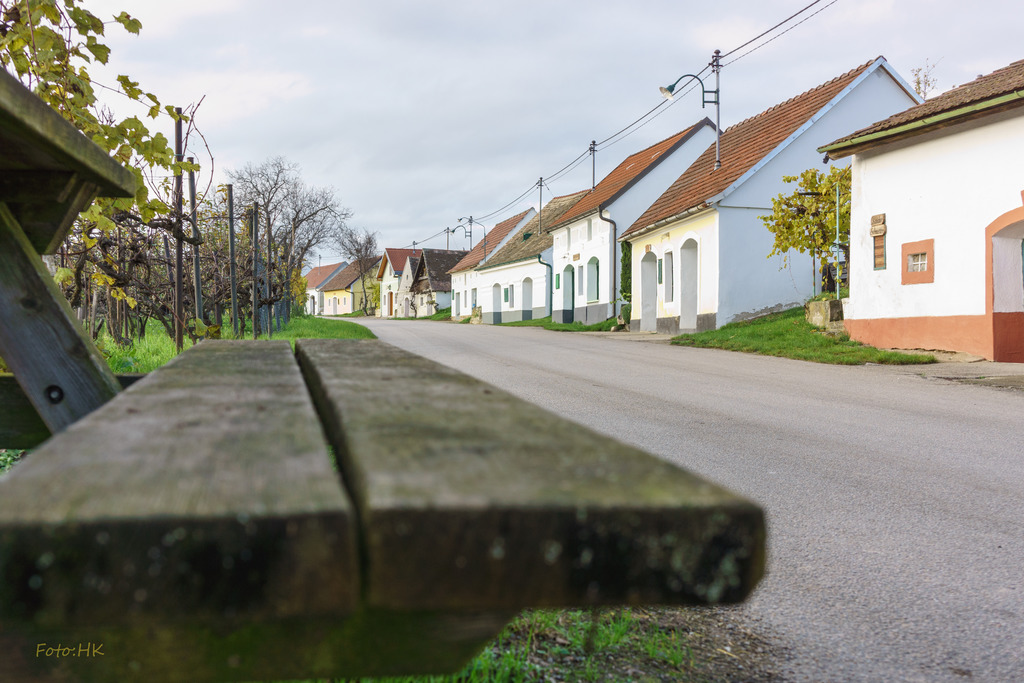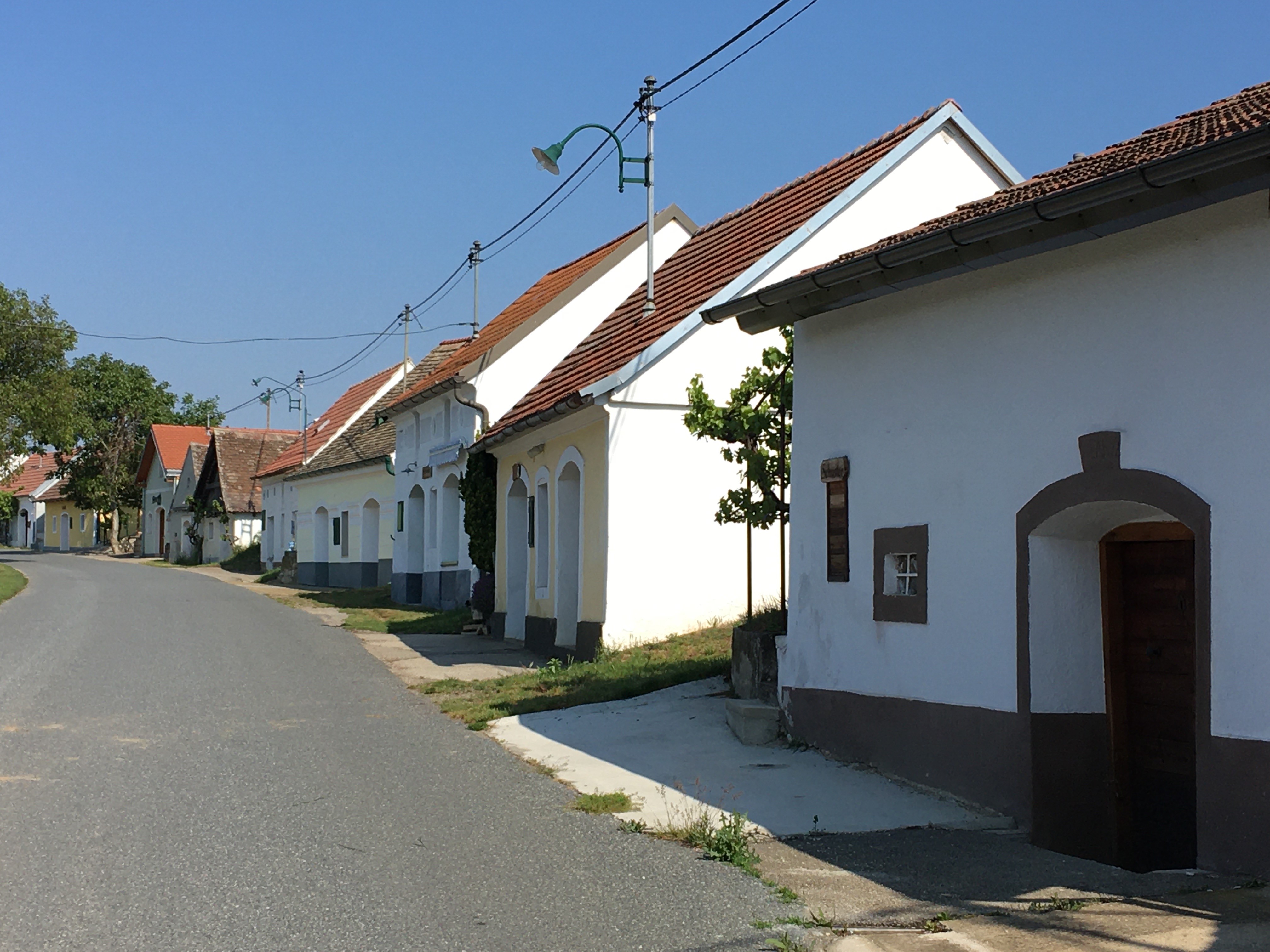
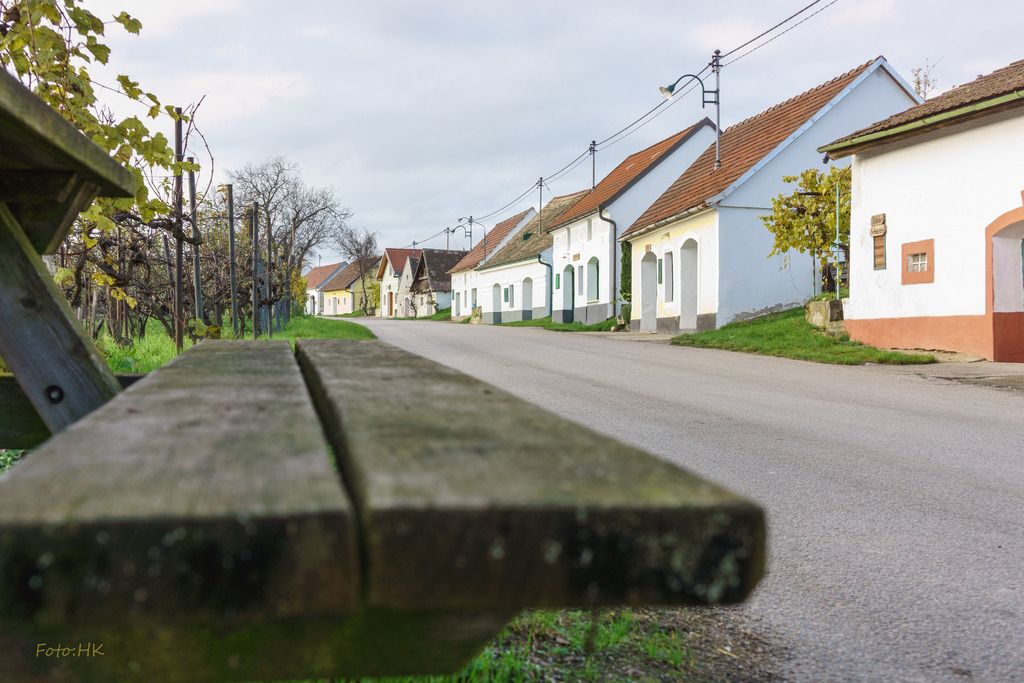
The wine cellar lane of Niederschleinz, situated to the north of the village on the gentle ridge of the Hinterdorfer reed, offers an impressive panorama. With over 50 wine press houses and wine cellars arranged like alleyways, it forms a charming ensemble that is visible far beyond the borders of the village. As the longest wine cellar lane in the Schmidatal, it is an important landmark of the region. As you stroll past, you can only imagine what an important role the cellars once played.
Architecture
Many of the lovingly preserved press houses and wine cellars date back to the 18th and 19th centuries and were once dug by hand into the loess by generations of winegrowers. Some are dated by inscriptions: The oldest date back to 1783, 1789, 1792 and 1804, while the French cadastre of 1823 already lists 52 press houses.
A mighty, light blue-colored press house on the north side of the wine cellar lane dates from the late 18th century. The sandstone walls of the dry floor windows show the braid decoration typical of the time of Joseph II. This building is probably the former manorial cellar.
Numerous late Biedermeier/neo-baroque façades of press houses - mostly with dry or granary floors - document the new self-confidence of the recently freed farmers. The charming, partly banded plaster façades with pilasters and profiled cornices have mostly been lovingly renovated in recent years. Numerous beam presses date back to the second half of the 19th century, such as the one made by the Eder family in 1877: As can be seen from the inscription on the press beam, the cellar used to be owned by the Klausgraber family. The inscription reads: "IHS. BUILT. ANNO. MDCCCLXXVII. GOTT. BLESS. THE. OWNER. JOHN. U. ANNA. KLAUSGRABER. JOSEF. ZWETTLER. ZIMMERMEISTER. IN. R. V. B."
The Hiata cellar, which was excavated and renovated in 1994, is interesting for the history of viticulture in Niederschleinz. Built around 1880, the building served as the residence and bedroom of the Hiata until 1947, who had to ensure that no grapes were stolen from the vineyards in the period from 15 August to 15 October.
The unmistakable charm of the Weinviertel wine cellar lanes can be experienced most impressively on a guided tour.
This provides fascinating insights into their history and the former significance of these special places.
Information on guided cellar lane tours in the Weinviertel can be found here:
www.weinviertel.at/kellergassenfuehrungen