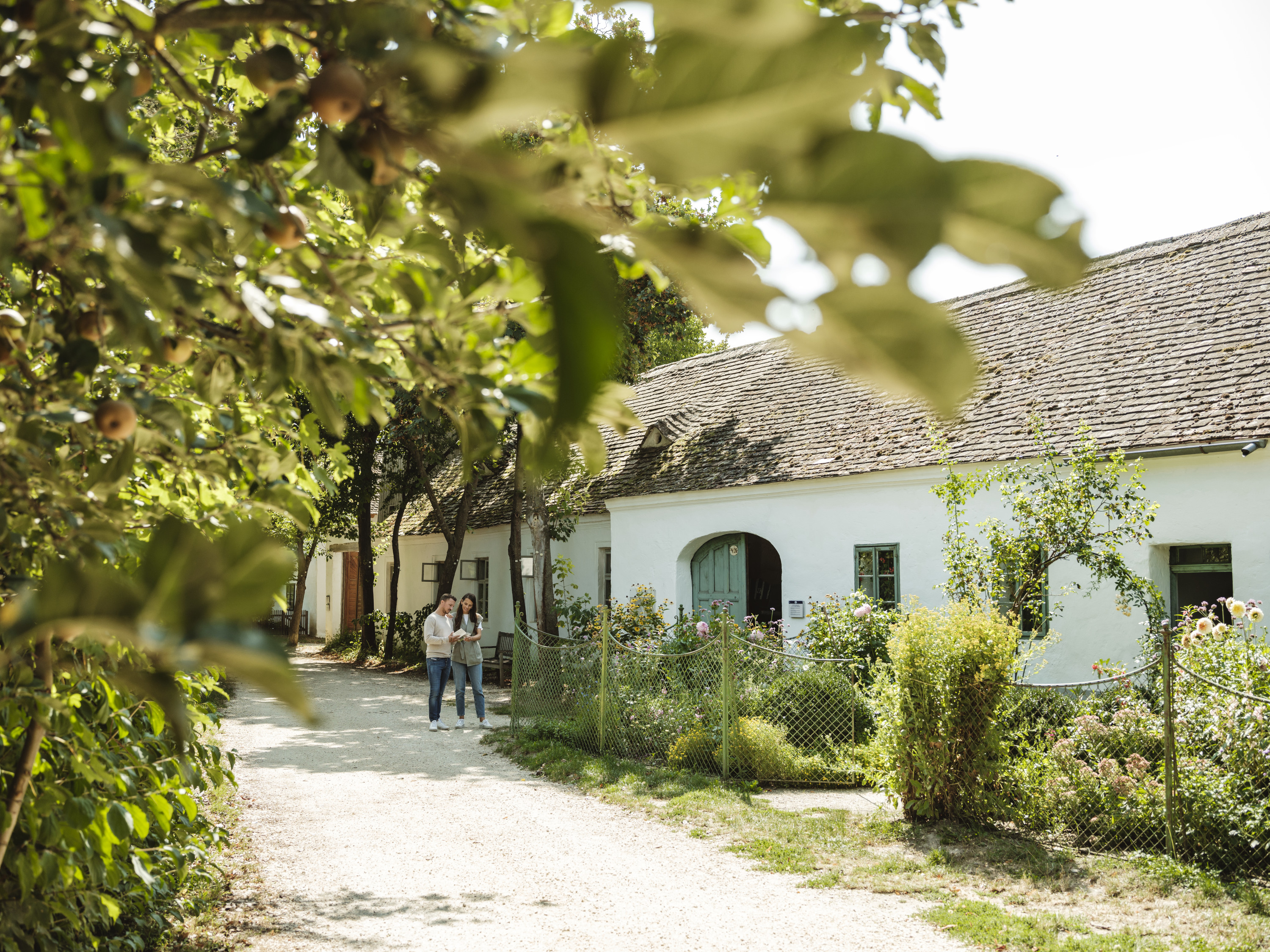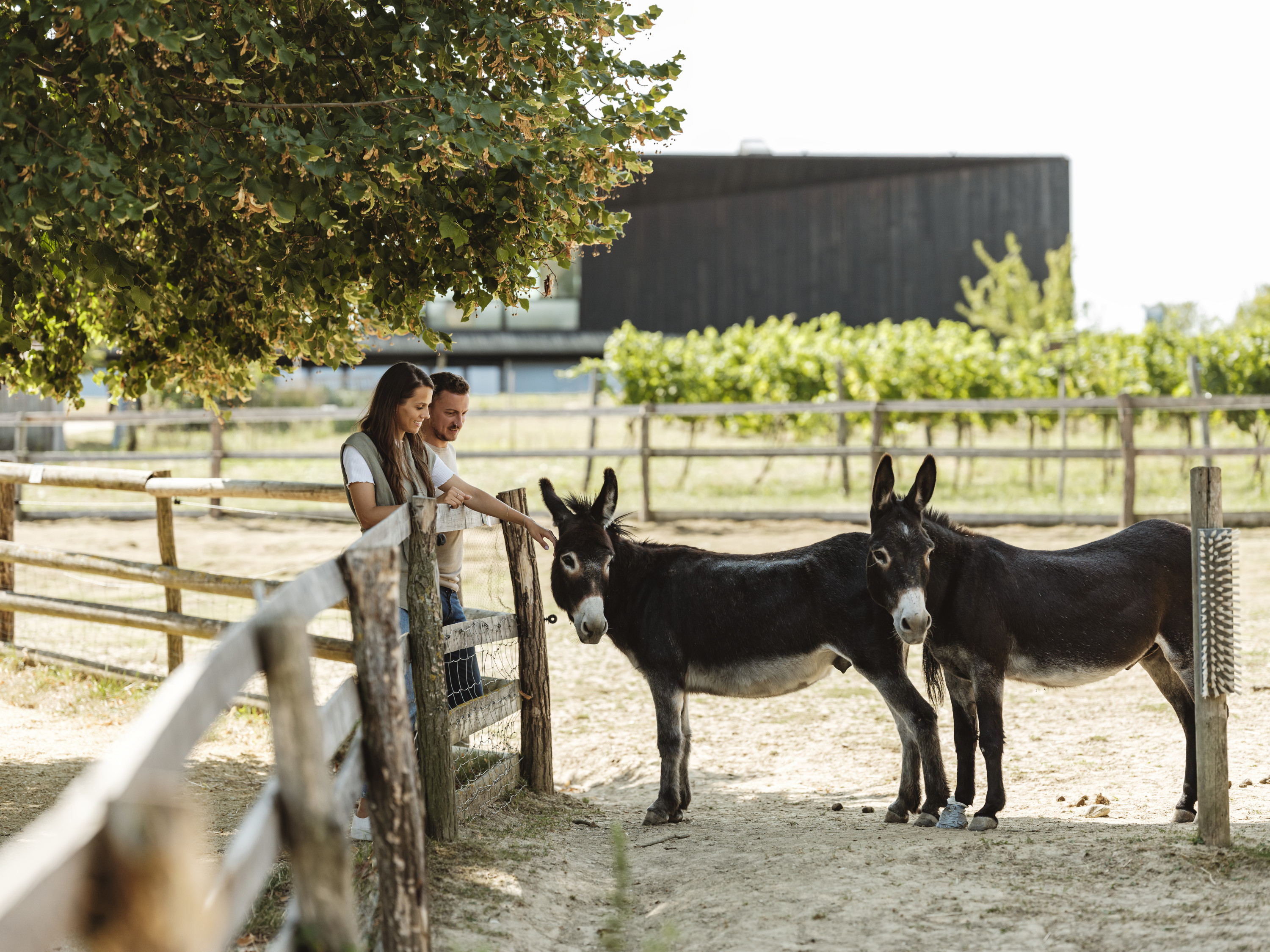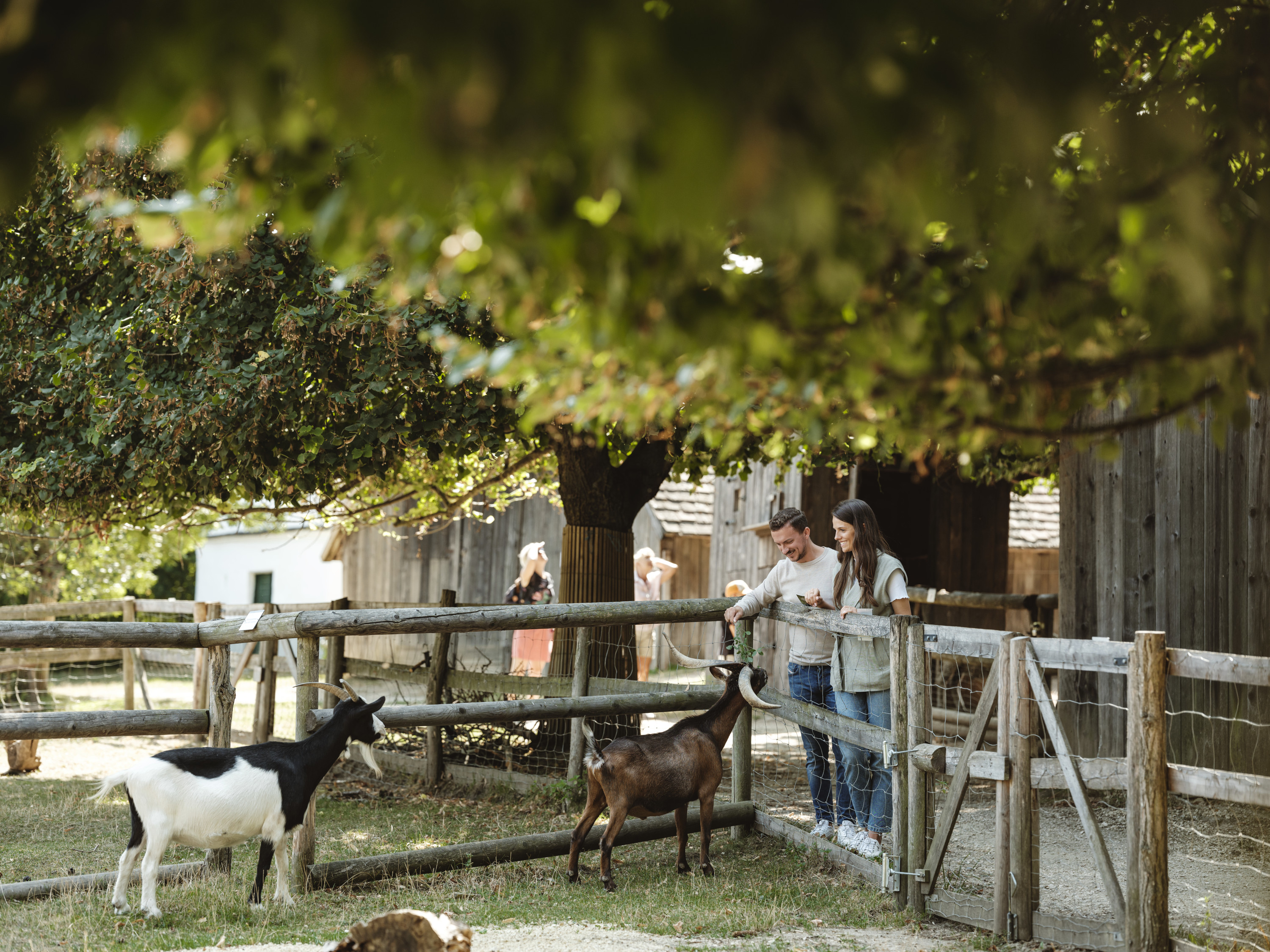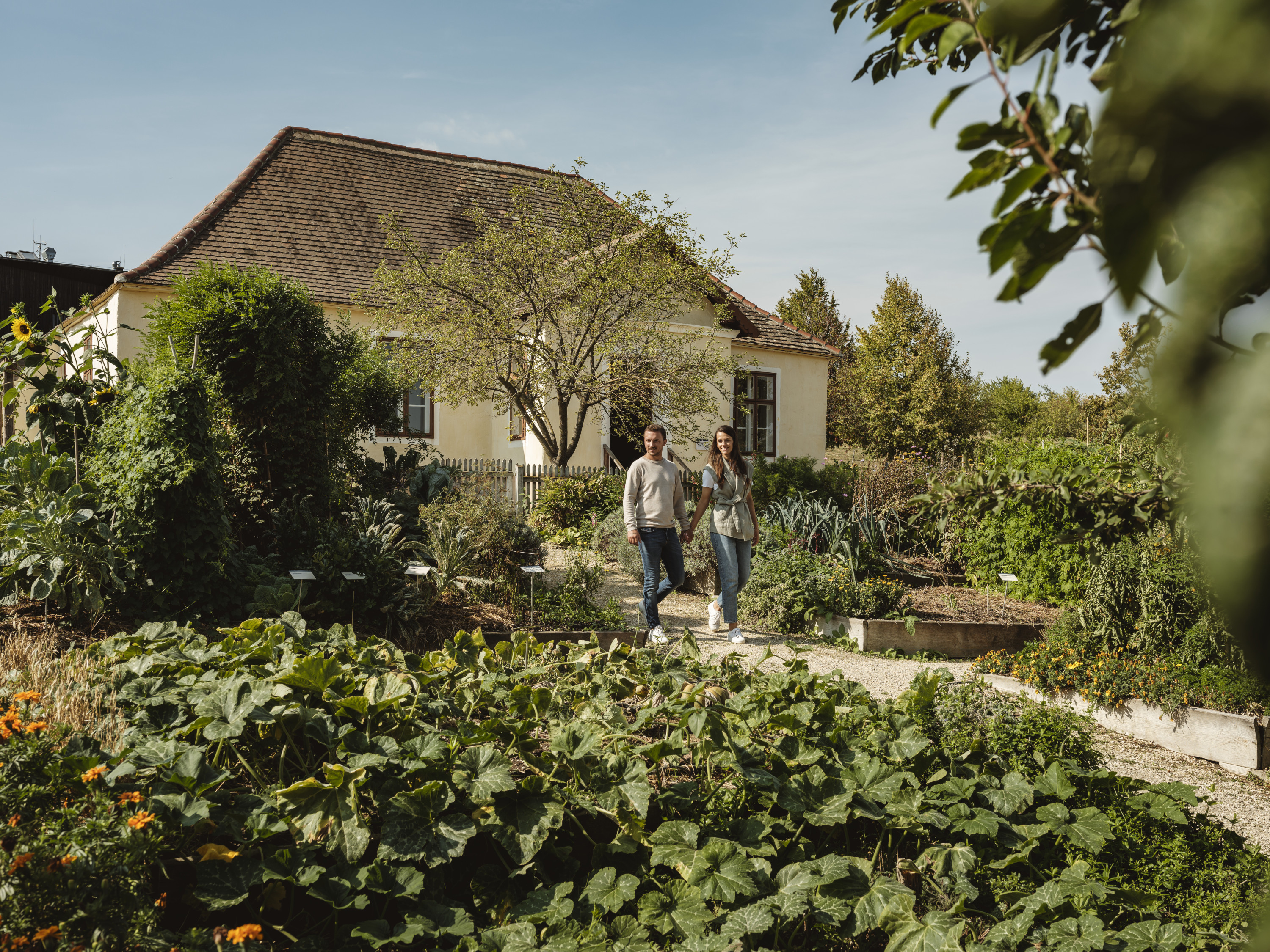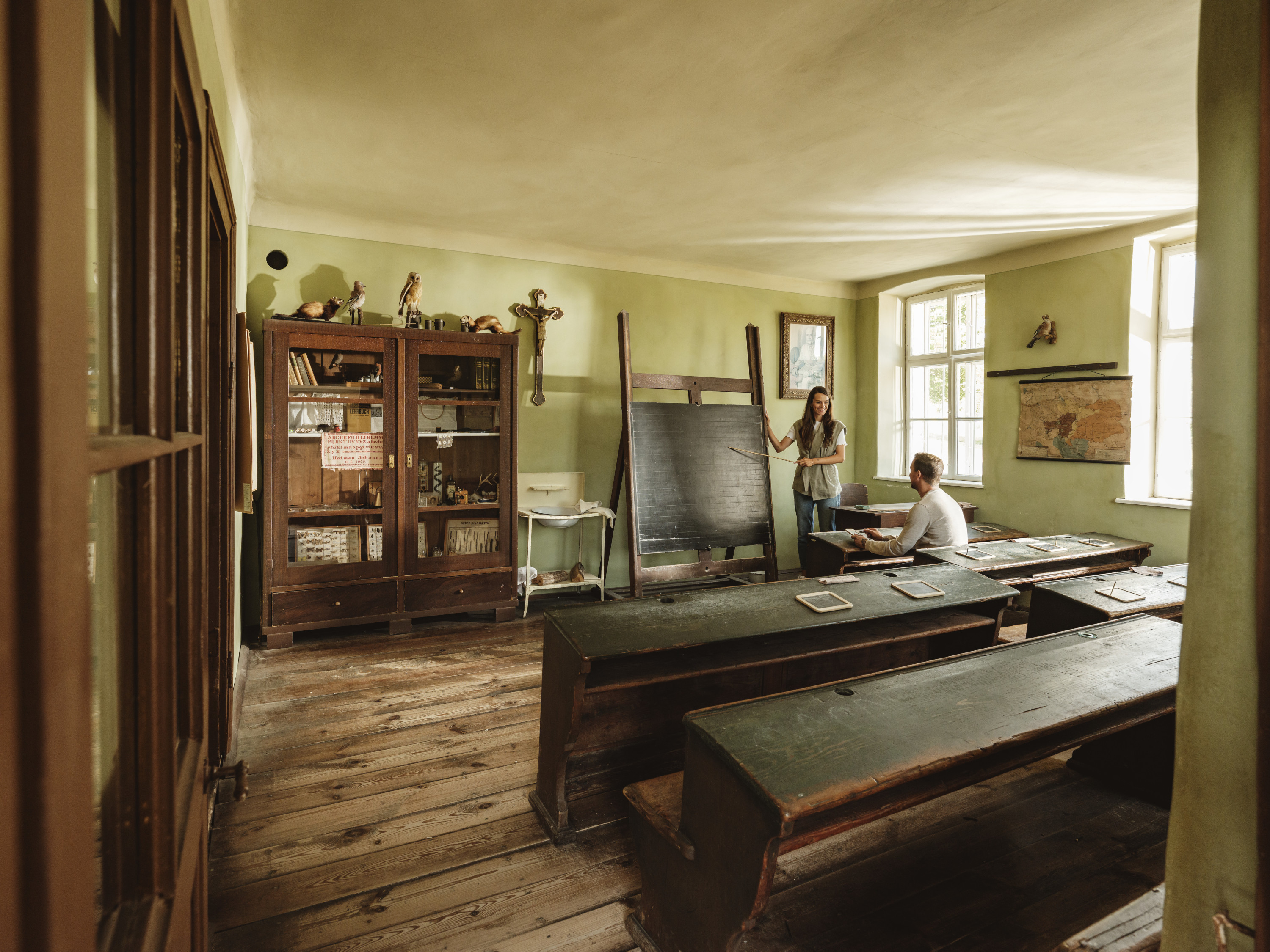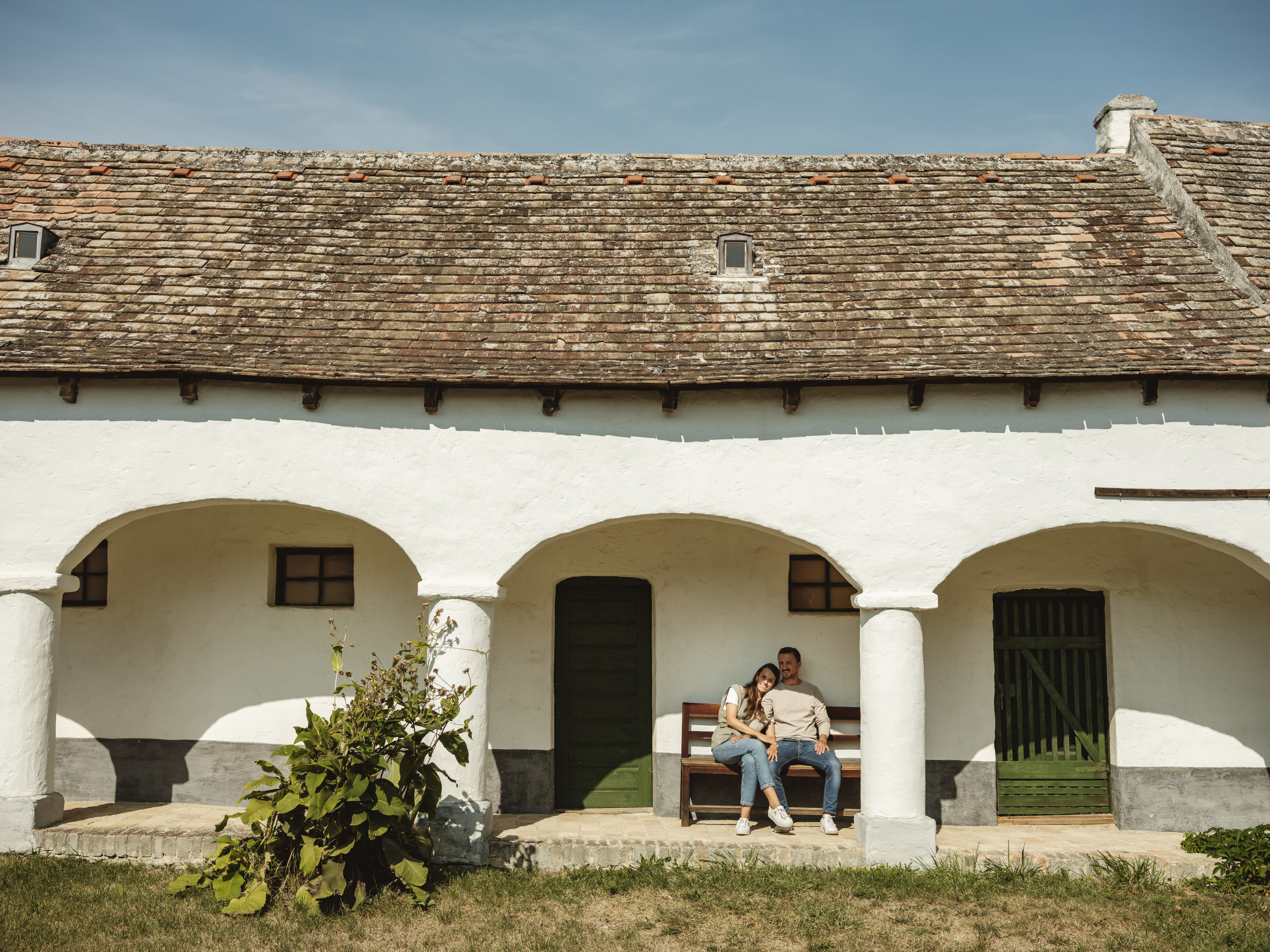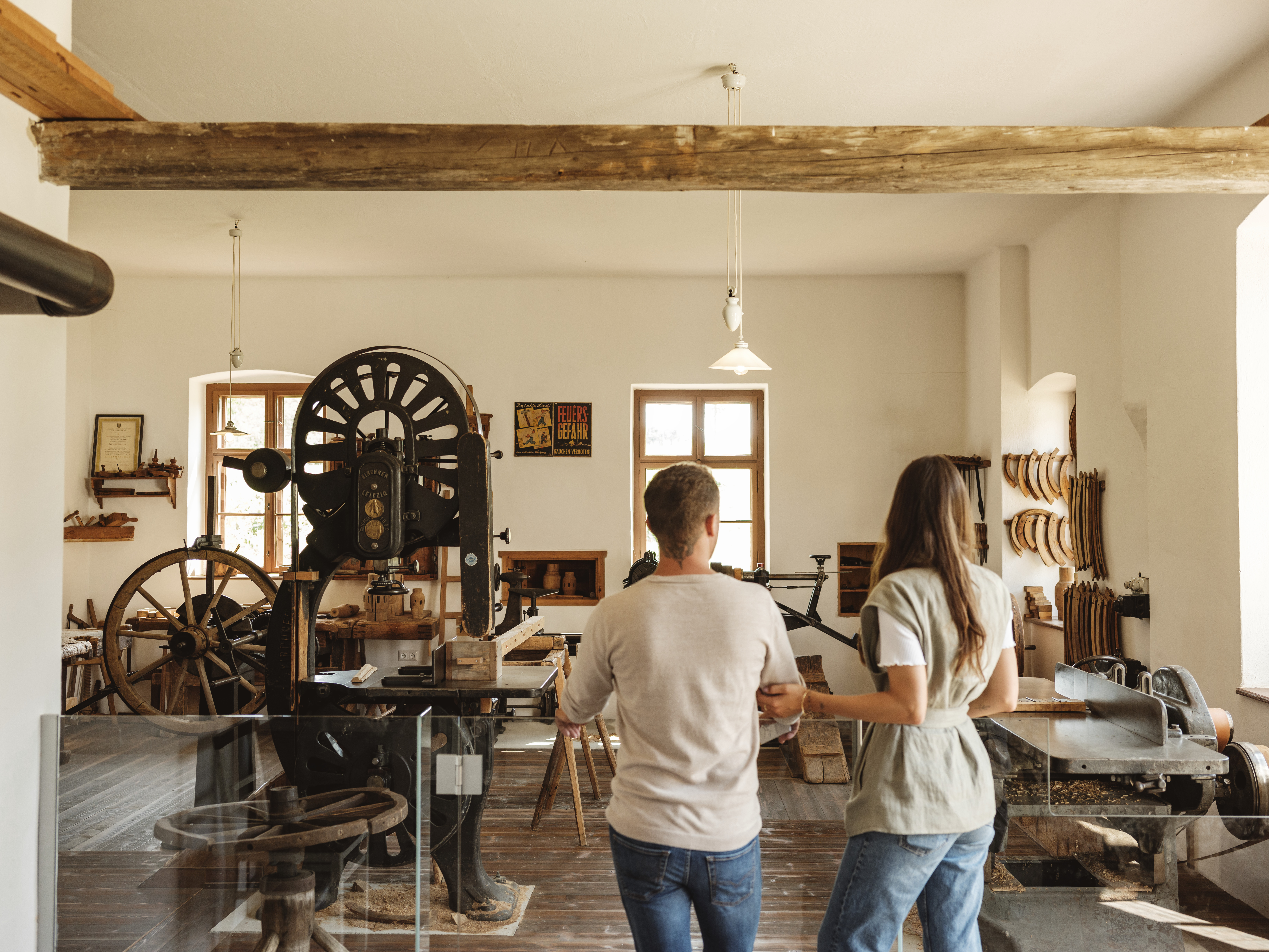
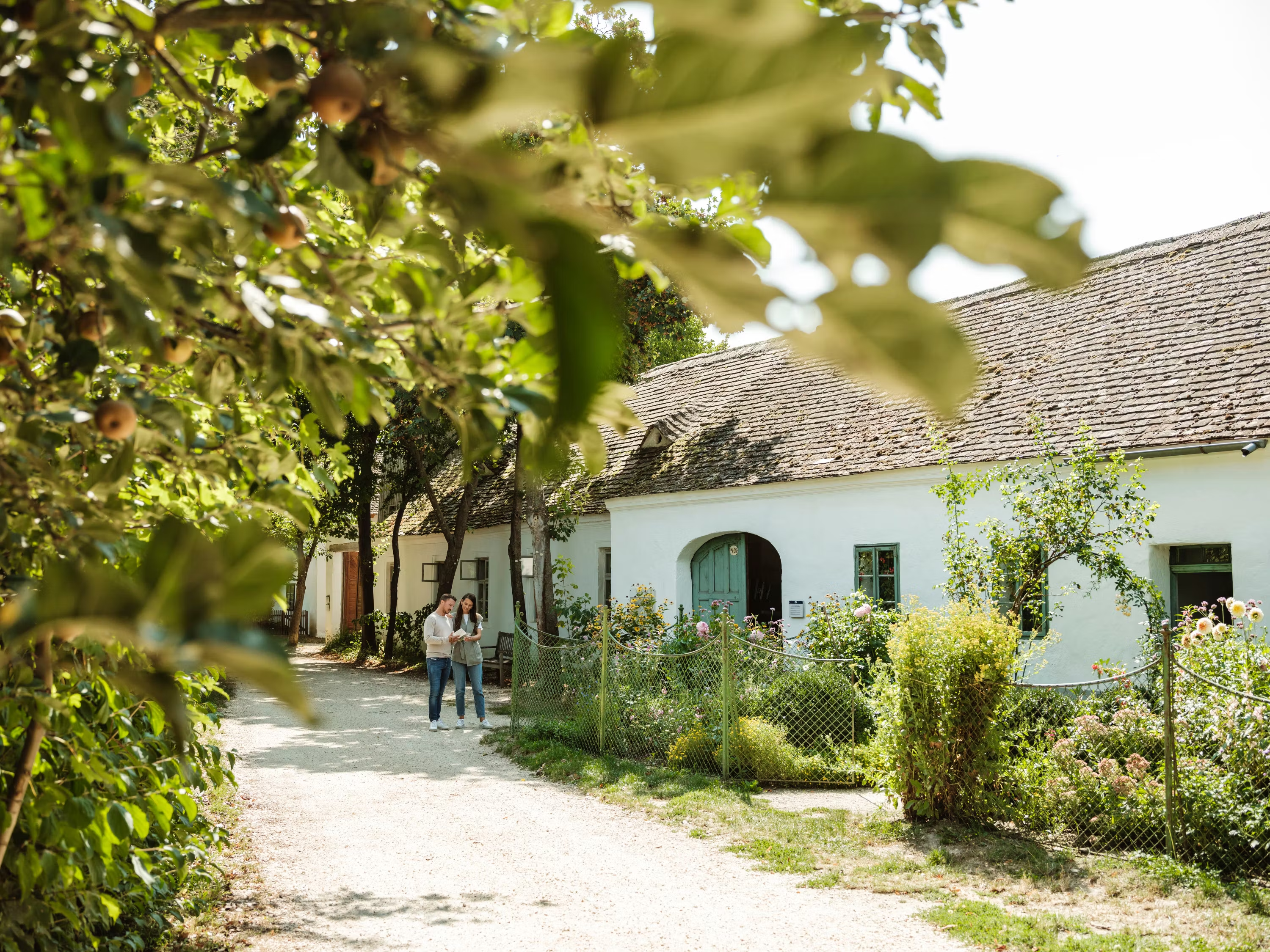
What was it like to live and work in a Weinviertel village around 1900? The Weinviertel Museum Village Niedersulz invites you to immerse yourself in everyday life back then. Around 80 reconstructed objects from the Weinviertel can be admired, surrounded by colorful cottage gardens with all kinds of plant rarities. Flowering front gardens adorn historic homes and craftsmen's houses, old varieties of fruit trees stand next to barns and herb and vegetable gardens can be found next to chapels or the village school. Goats, pigs, rabbits and poultry - everything that belongs to a real farmstead can be found on the "Living Farm". The authentically furnished buildings are complemented by several exhibitions that focus on life and work in the olden days. After a walk through the museum village, the rustic village inn tempts visitors with delicious home cooking. Many picnic facilities, two playgrounds for children and a museum store round off the offer. Dogs are welcome in the museum village (please keep them on a lead).
In the "House to try out", all kinds of everyday things are available to try out for yourself. These are jobs that were done exclusively by the female members of the household. How do you darn socks and stockings? How hard is it to put a loaf of bread in the oven? How does it feel to lie on a straw or horsehair mattress? And how much or little light does a candle or a kerosene lamp provide? Guests can try out all this and much more for themselves in the Kellerstöckl from Erdpreß and get to know life and work in a Weinviertel cottage.
The educational format "Everyday life in the village - what was it like back then?" invites visitors to actively experience the houses, courtyards and workshops of the museum village every Saturday, Sunday and public holiday from 1 pm. Old crafts, traditional customs and the labor-intensive everyday life are thematized. The program is varied - saddlers, shoemakers and wainwrights demonstrate old craft techniques, cultural mediators talk about the saints of farming families, the everyday working life of day labourers and hygiene in the olden days. Work in the village, such as woodwork, laundry and school lessons, are demonstrated and can be experienced at first hand.
Season program 2026
The seasonal program focuses on everyday life around 1900 and how it was conveyed. At the start of the season on April 11, 2026, the special exhibition "Happiness is yours at the domestic hearth - embroidered clichés around 1900" will be presented. On display will be wall coverings, also known as "Spruchdeckerl", and other textiles embroidered with clichéd images and sayings.
At the popular plant market at the museum portal on April 25, organically grown rarities from the museum village and the region can be purchased.
The Kellergassenfest on May 9 will be full of atmosphere, with numerous winegrowers from the region as guests.
The role women had to play in the 19th and 20th centuries will be the subject of the Village Women's Everyday Life on May 31.
The youngest visitors are the focus of the Children's Everyday Life in the Olden Days on July 5, where there is plenty to experience, from churning butter to washing clothes.
On Dirndlgwand Sunday, September 13, the Kleinregion Südliches Weinviertel also invites you to a regional festival in the museum village.
The role of horses in the past will be impressively highlighted on September 26 at the Horse Power event.
A completely new event is the Village Autumn on October 11, which showcases traditional autumnal work related to the processing of the harvest and entertains with music, dancing and a market.
On the national holiday on 26 October, families take center stage: at the Children's & Games Festival, old games such as blind man's buff, matador and much more can be tried out.
The colorful front gardens, fragrant herb and vegetable gardens are brought into focus at the Lower Austrian Show Garden Days. These take place from May 16 to 17, June 20 to 21 and September 19 to 20 and offer special presentations as well as the opportunity to take part in various garden tours. The Garden Summer Full Moon Nights (June 30, July 29 and August 28) promise extraordinary garden experiences at dusk and by moonlight.
Courses on traditional skills were offered last year and will be held again: Museum Knowledge for Everyday Life will focus on wood on June 20 and textiles on June 27. Pre-registration is required.
The educational format "Everyday life in the village - what was it like back then?" invites visitors to actively experience the houses, courtyards, gardens and workshops of the museum village every Saturday, Sunday and public holiday from 1 pm. Old crafts, traditional customs and the labor-intensive everyday life are shown and discussed.