
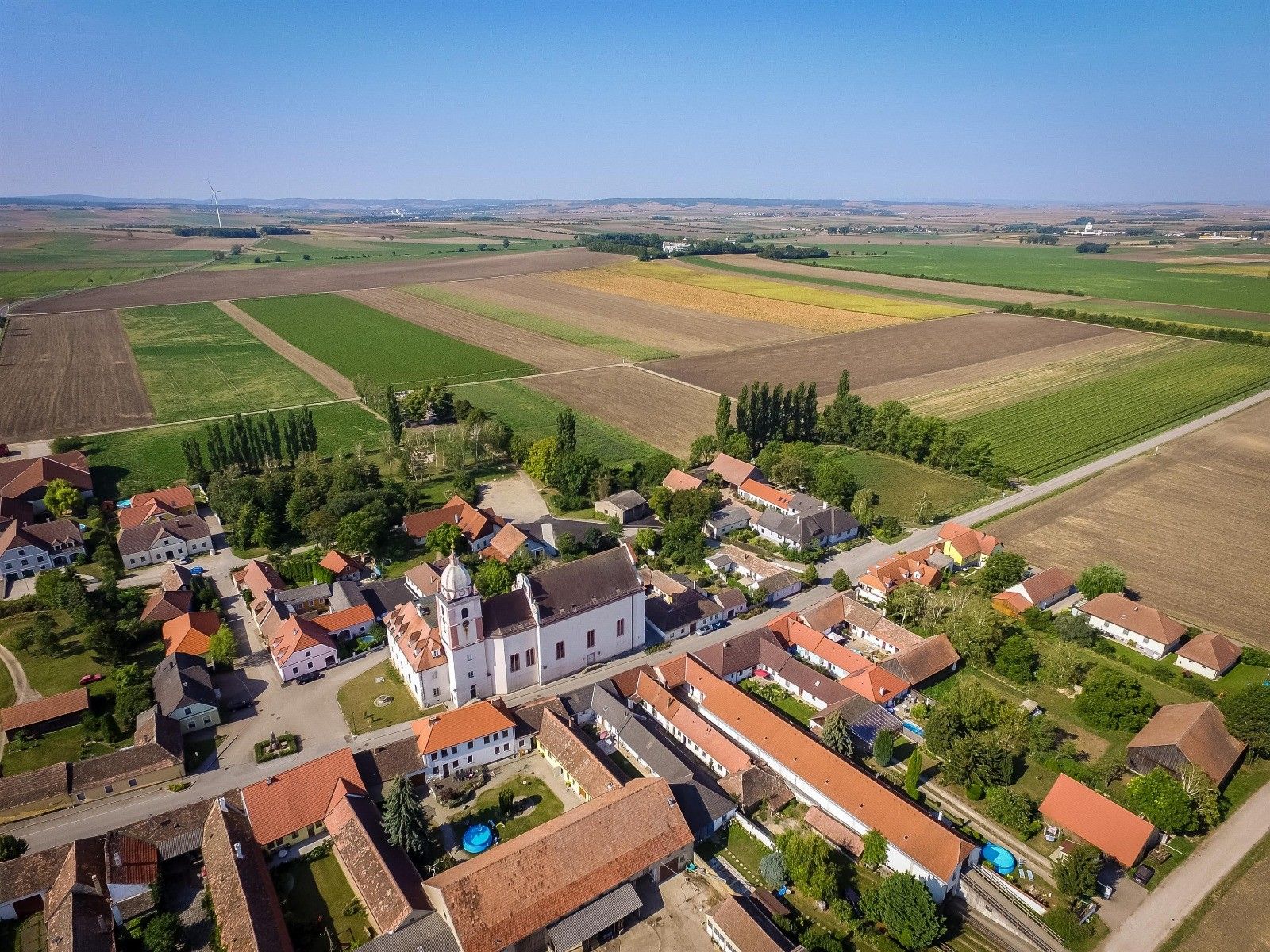
A pilgrimage that an emperor abolished—and a priest revived two hundred years later. The history of the Basilica of the Nativity of Mary in Maria Roggendorf is a story of faith, politics, and the enduring power of piety.
The Göttweig Abbey had the early Baroque hall church built between 1651 and 1653 as a pilgrimage church; its centerpiece was a miraculous image painted on leather—Mary with the Child, first mentioned in a document in 1667. For over 130 years, the church witnessed an ever-increasing stream of pilgrims. Emperor Joseph II, however, was a man of reason; pilgrimages did not fit into his vision of a rationally ordered society. In 1785, as part of his church reforms, he therefore had them abolished: Processions were banned, brotherhoods dissolved, and votive tablets removed. Not even Pope Pius VI’s personal journey to Vienna had been able to change the emperor’s mind. The church remained—as a parish church—but the pilgrimage fell dormant for nearly two centuries.
In 1969, the priest at the time had the miraculous image restored and rededicated it on September 14—the Feast of the Exaltation of the Holy Cross. Following the example of Fátima, he reestablished the pilgrimage to take place on the 13th day of each month. In 1988, the church was elevated to the status of a minor basilica.
The Church and Its Interior
The soaring nave with its volute gable and the massive tower at the chancel apse—with an octagonal dome, tambour, and lantern—define the church’s exterior. After a fire in 1695, the tower was rebuilt and the church was renovated by the renowned Baroque architect Carlo Antonio Carlone.
Inside, a closer look is well worth it: The side altars, created around 1762 by Joseph Pollak, feature altarpieces by Martin Johann Schmidt—the same “Kremser Schmidt” whose work can also be found in the parish church of Haugsdorf. The frescoes in the apse—the Assumption and Coronation of Mary, the Holy Trinity, and the Resurrection of Christ—were likely painted by Andreas Rudroff, a student of Schmidt, around 1800. The pulpit was created in 1767 by Jerig Sturm; the sounding board with its acanthus canopy is older, dating from around 1700.
In the sacristy, the church houses remarkable votive images, including a depiction of a shipwreck from 1761—a testament to the people who once made pilgrimages here to give thanks or implore for help. A carved figure of the Virgin and Child from around 1500 is one of the oldest objects in the building.