
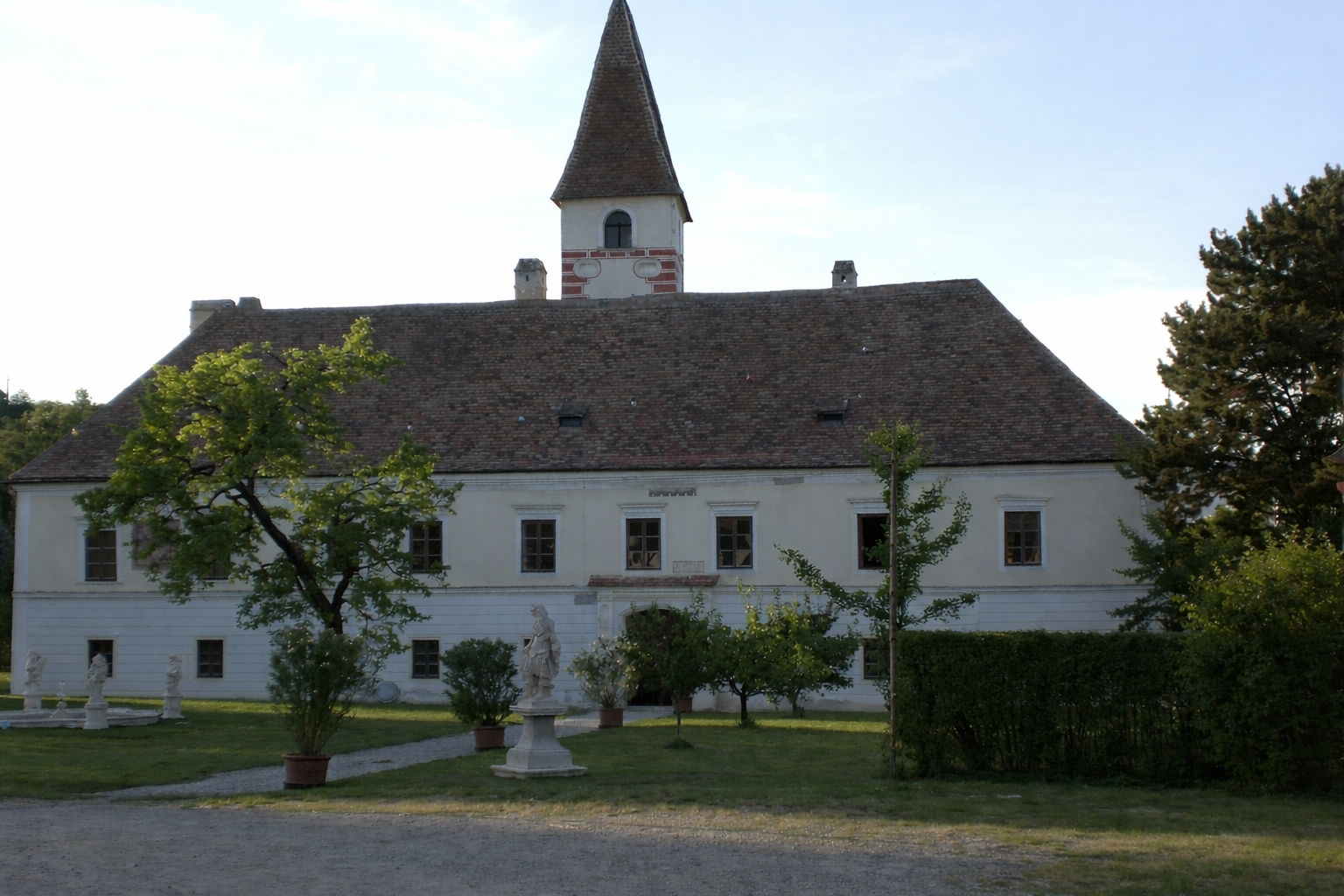
The castle tells of a long, multi-layered history - of fortifications surrounded by water, Romanesque stone statues and late Gothic walls that still retain their secrets today.
From the "Veste Limburg" to today's castle
Not far from today's castle once stood the old "Veste Limburg zu Limberg", a medieval castle complex that had already fallen into disrepair by the 16th century. Like the castle in Sachsendorf or the noble residence in Naschendorf - both also owned by the Lords of Zinken - it is likely to have fallen victim to the turmoil of war and the passage of time. The former castle was partially or perhaps even completely surrounded by water. Historical maps from 1823 still show a large pond at this location. At the beginning of the 20th century, reeds and remnants of the wetlands could still be found here - evidence of a high water table before the nearby stream was regulated. The pond was probably later filled in with rubble from the ruined castle. An impressive indication of this is a massive foundation wall that was discovered during a well excavation: The masonry was so resistant that the well was eventually built elsewhere.
A building with many layers
Today's castle stands on the site of a former farmstead. It was long thought to have been built at the beginning of the 17th century - but the shape and details tell a different story. The irregular square building with a tower and small arcaded courtyard indicates that it was built earlier. During renovation work in 1982/83, the date 1570 was uncovered - a clear indication of the 16th century. However, it is probably not a completely new building, but an extension of an older noble residence or Meierhof. Particularly interesting: while the western part of the castle has elegant arcades, this element is missing in the northern section. Its simpler design suggests that older, possibly late Gothic building fabric is still preserved here. Other sources actually date the core of the castle to the late Gothic period and report an extension around 1750.
The lions of Limberg
A special discovery was also made during the restoration in the 1980s: Two Romanesque-style lion figures were found in the stonework. Apparently, they had simply been reused as building material during earlier renovations or after war damage. Today, the restored figures can be admired in Altenburg Abbey. Lions traditionally flanked the entrances of fortified buildings and symbolized strength and protection. Whether the Limberg lions once guarded the entrance to the old castle or to a former noble residence remains an open question - but their powerful presence lends an almost mythical note to the history of the place.