
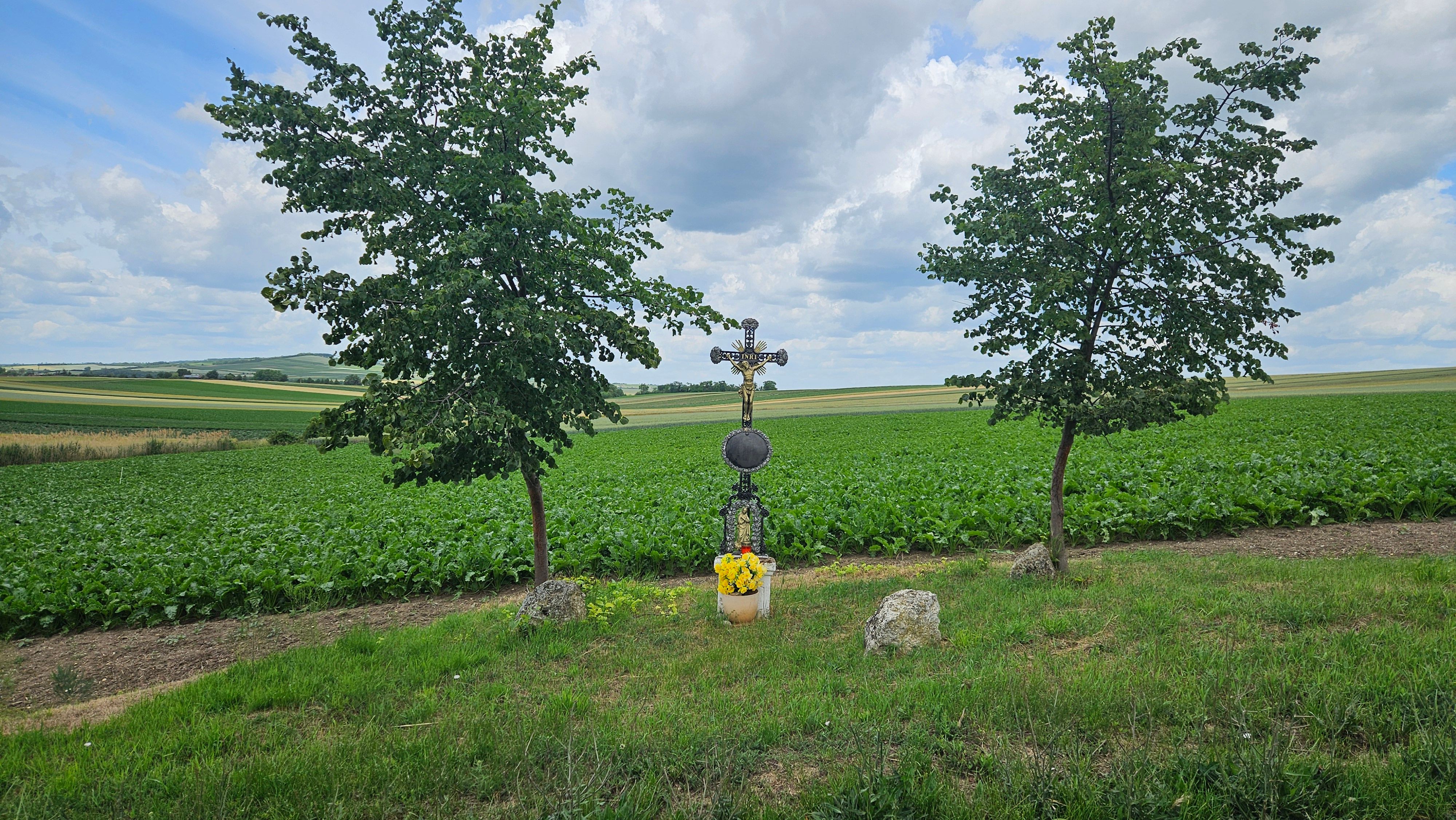
Beginning in 1830, cholera struck the region repeatedly with full force—a plague that struck without warning and plunged entire village communities into fear. The sick were isolated, and the dead were buried quietly outside the villages, away from the usual cemeteries.
In 1832, the community established its own cholera cemetery south of the village. It was not merely a precaution—it was put to use: During the epidemic years of 1836 and 1866, people found their final resting place here, quietly, without the usual rituals, far from the village center, and without headstones. The cholera cross still serves as a memorial to them today.
Precautions against the epidemic remained in effect until 1910—for nearly eighty years, the region lived with the memory of the outbreaks and the fear of a recurrence. Dedicated cholera hospitals, strict burial regulations, curfews: Cholera has permanently altered the way a community deals with illness and death.
The trees surrounding the cross, which were once cut down, have long since been replaced by new ones. The fact that this site is still maintained and kept alive in memory today is thanks to all those who take care of it.