EV13 Stage 8: Laa - Valtice
Use our AI guide
Do you have any questions about your stay?

Cycling tour Starting from Laa/ Thaya
Start: Laa / Finish: Valtice
Start: Laa / Finish: Valtice
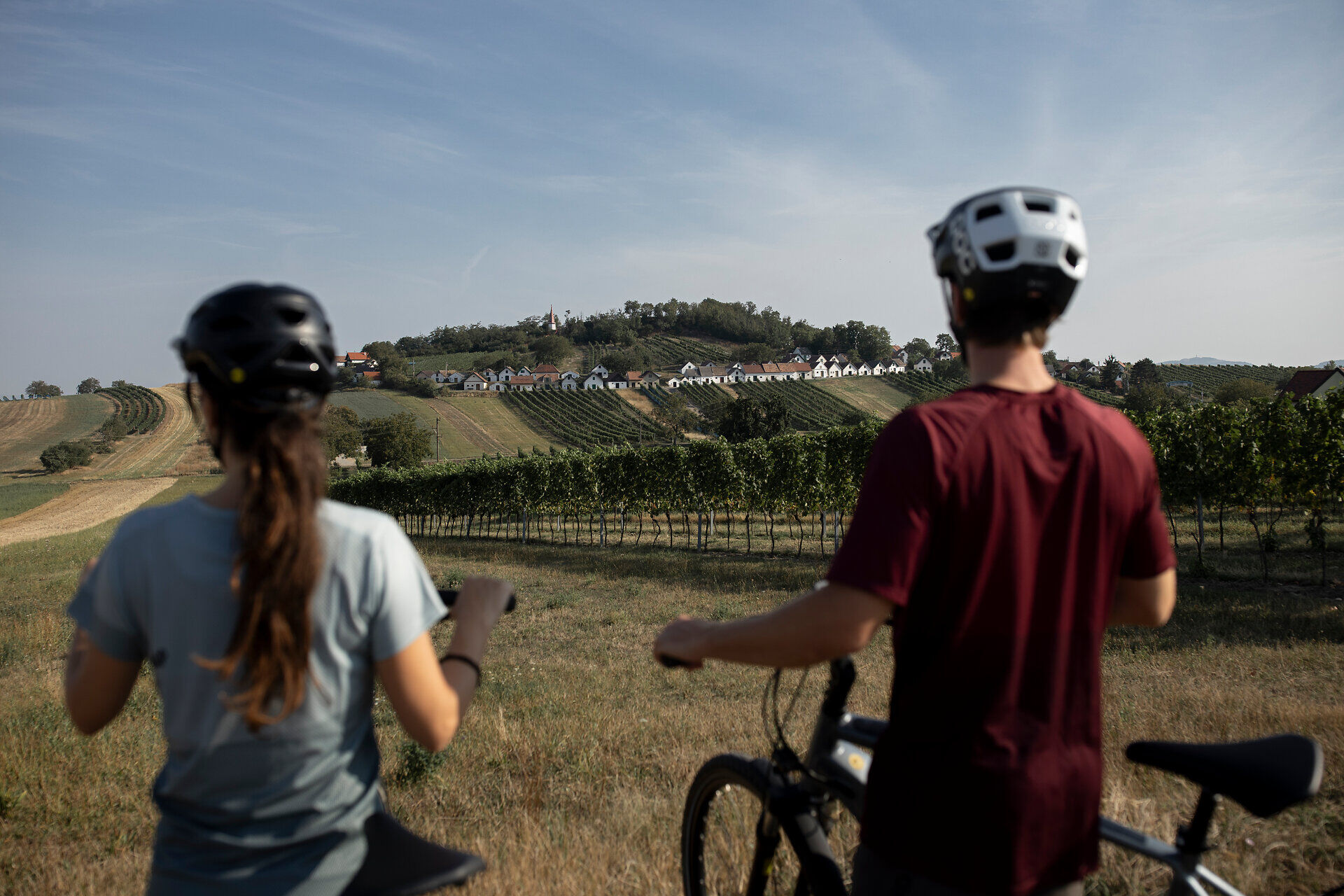
After relaxing in the thermal baths in the small town of Laa an der Thaya, you set off for Wildendürnbach, which is known for its spiral-shaped Galgenberg wine cellar lane. From here it is only a short distance, past the rest area at the Ottental-Mikulov border crossing, to the romantic town of Mikulov. After Mikulov, the trail leads into the Lednice-Valtice cultural landscape, a UNESCO World Heritage Site. The history of the Iron Curtain is documented by the museum in Valtice, which is located in the building of the former customs station.
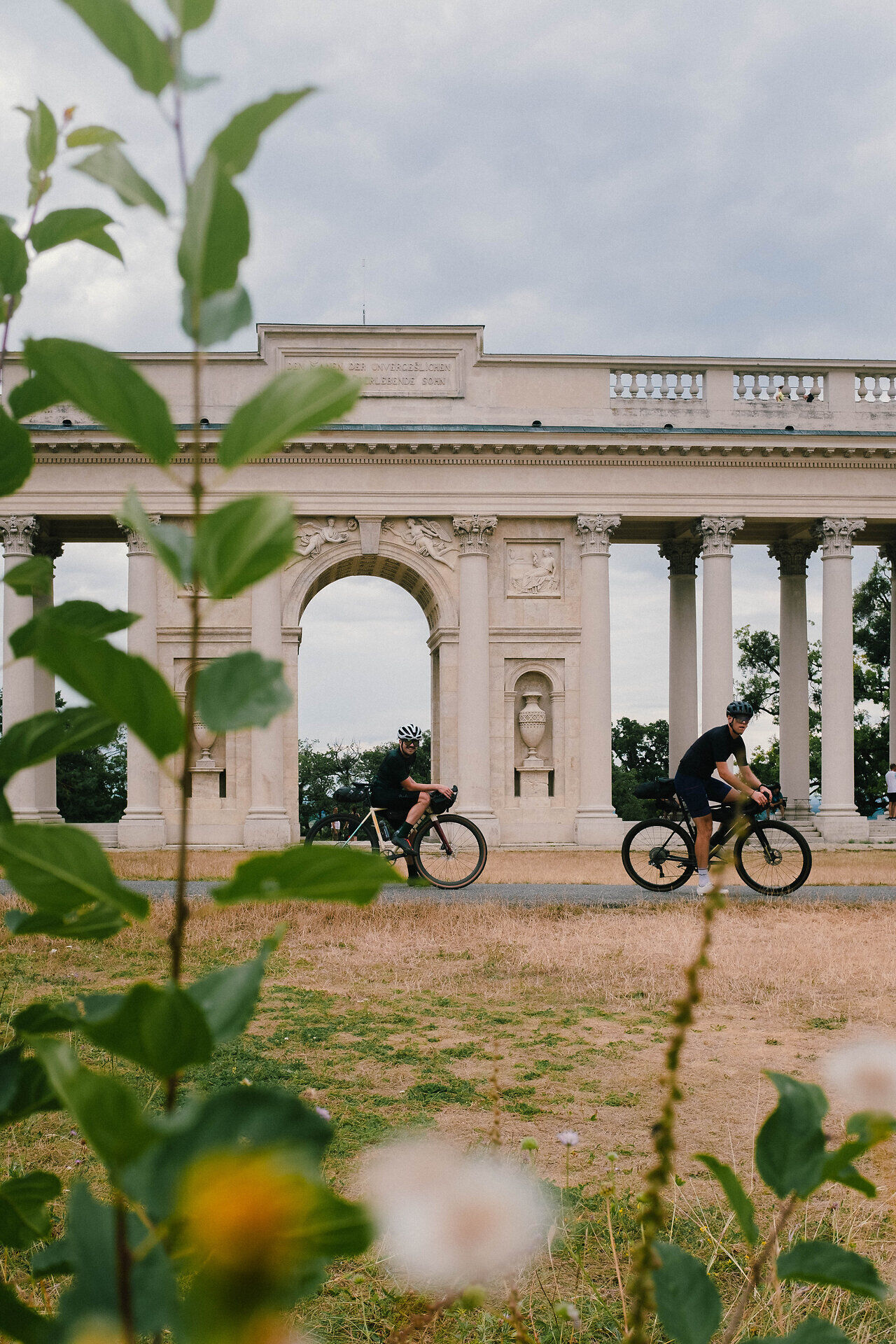
After resting in Laa, you set off for Wildendürnbach, known for its spiral-shaped Galgenberg wine cellar lane, from where it is only a short distance to the romantic town of Mikulov, past one of the most picturesque resting places in Moravia at the Ottental-Mikulov border crossing. The historic center of the town, located at the foot of the Pálava Hills, is surrounded by vineyards. In addition to the square with its sgraffito houses and the Dietrichstein Crypt, it is home to a baroque chateau with a museum and the Jewish quarter with a synagogue and Jewish cemetery. Once you have had your fill of Mikulov Castle, the Jewish cemetery and the view from the Holy Hill, you can follow the Path of Freedom parallel to the route. The information boards along the way show the fate of people who dared to take the path to freedom. You can also stop at the memorial to the victims of the Iron Curtain, known as the "Gateway to Freedom", which commemorates the 53 victims of the Iron Curtain in the years 1948-1989 in the form of steel bars. You can refresh yourself in nearby Sedlec and then continue to Úvaly, which was practically completely surrounded by barbed wire during the communist era. Once you have left the climb to the border crossing behind you, you can visit the Iron Curtain Museum in a former customs station or drive to one of the artifacts of the Lednice-Valtice cultural landscape, the Raisten Colonnade, from where there is a poignant view of the Pálava Mountains or the tiny Austrian fields and vineyards. On the road downhill, it is only a short distance to Valtice, the famous chateau with its extensive park and herb garden, but also the National Wine Salon, where you can taste the best vintages of Moravian wines in the chateau's cellar vault.
Please don't forget your passport!
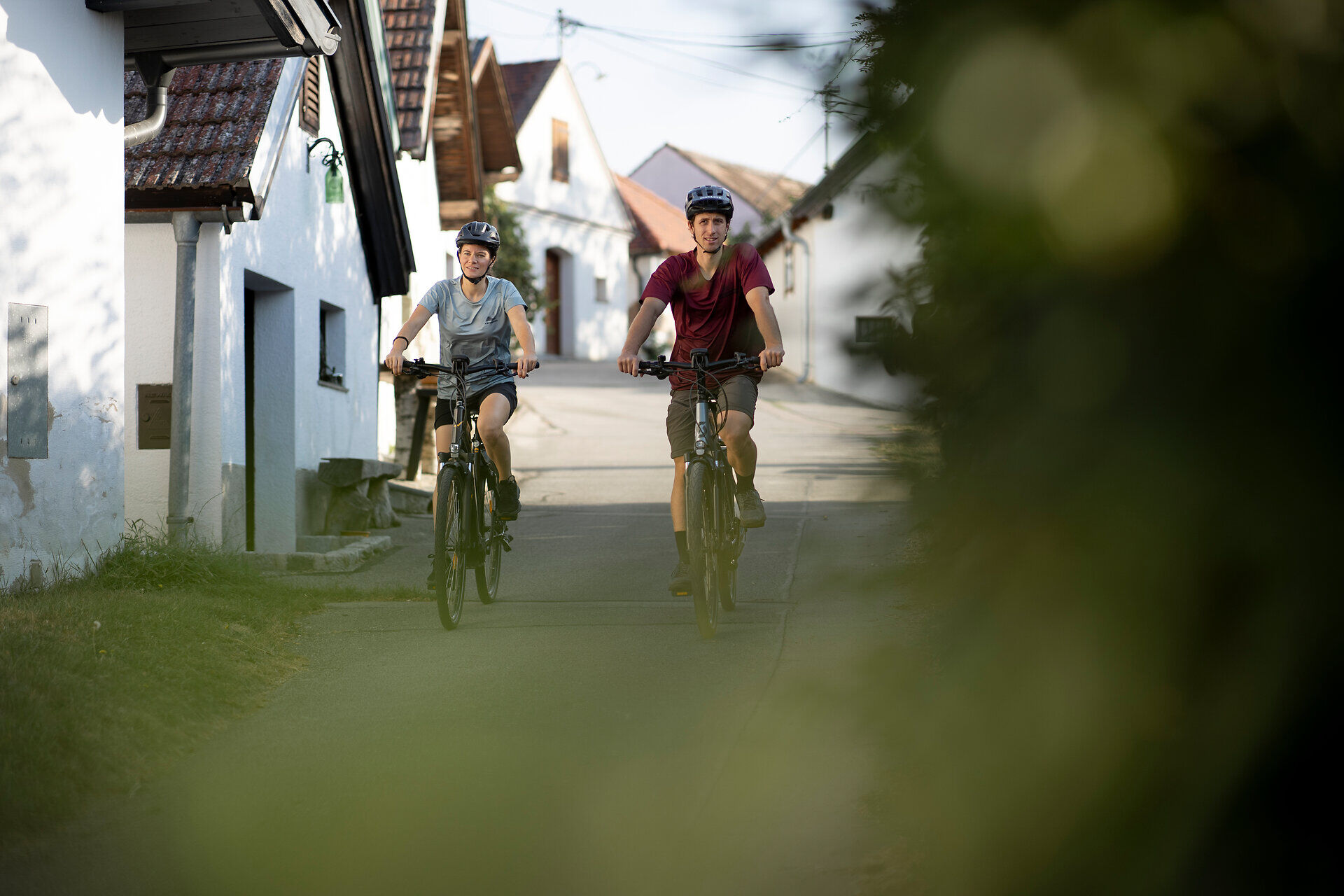
From Laa an der Thaya, head for Wildendürnbach and then up the hill to picturesque Galgenberg, also known as Šibeniční Vrch (Gallows Hill), which offers vineyards and wine cellars. There are a total of 184 wine cellars around Galgenberg, which were voted the most beautiful cellar lanes in Lower Austria in 2013. There are tours of these cellar lanes, wine tasting or refreshment in the cellars. On your way to Mikulov you should definitely stop to relax on the border, where the most beautiful rest area in South Moravia is located. It has the shape of a wine press and sundial and is an ideal place to enjoy the view of the impressive Baroque castle in Mikulov which stands on a hill above the town. The town of Mikulov lies amidst vineyards. You definitely should not miss this historic old town on your way, as it has a romantic square with the Dietrichstein tomb, a Baroque castle, where you will find the largest domestic exposition of winemaking culture and a unique giant wine barrel, Jewish sights and the Holy Hill (Svatý Kopeček) to which the early Baroque Way of the Cross with Passion chapels leads from the town. When you leave Mikulov, go along the Freedom Route in parallel with the railway. Information panels along the route will inform you about the fates of people who tried to leave in order to find freedom. You can make a stop at the memorial to the victims of the Iron Curtain. In nearby Sedlec you can refresh yourself and continue on to Úvaly, which was almost entirely surrounded by barbed wire during the totalitarian era. After going up the hill to the Valtice–Schrattenberg border crossing, you can visit the Iron Curtain Museum in the former customs house, where, during a half-hour tour, you will learn all about how the borders were fortified and what dangers threatened those trying to flee, and there is also an interrogation cell and border fence replica. You can also see one of the outdoor artefacts of the Lednice-Valtice Cultural Landscape, Reistna with a Colonnade – a monumental Neoclassical building decorated with figures of ancient mythology – from where the most atmospheric view of Valtice with its impressive Baroque castle and of the Lednice-Valtice Cultural Landscape opens. Then it is just a short ride down the road to Valtice, famous for its castle. For centuries the castle was owned by the Liechtenstein family and from 1560 it was the main residence of the dynasty. The wealth of the family is demonstrated by the size and splendour of the entire castle grounds. Its current appearance was created by a number of prominent architects of the 17th and 18th centuries such as Anton Ospel, Anton Erhard Martinelli and Antonio Beduzzi. The castle is considered one of the most important examples of Baroque architecture in the Czech Republic and in 1996 the castle and castle park were listed among the UNESCO World Heritage Sites. The cellar of the castle holds the National Wine Salon, where you can taste the best years of Moravian and Czech wines.
Taste wine with the professional and entertaining commentary of sommeliers! Get to know the best Moravian and Czech wine, which was awarded the Gold Medal of the Wine Salon. The beautifully reconstructed and custom-made cellar of the Valtice Castle holds the 100 best wines from all over the Czech Republic for the current season. The wines which are kept here are for sale.
Leider können wir Ihnen zum jetzigen Zeitpunkt keine Wetterdaten für den Ort anzeigen.
Galgenberg Wine Cellar Lane in Wildendürnbach
Holy Mountain in Mikulov
Liechtenstein: Lednice Castle (Eisgrub)
Liechtenstein Castle in Valtice (Feldsberg)
Letzte Änderung: 3 Aug 2026