
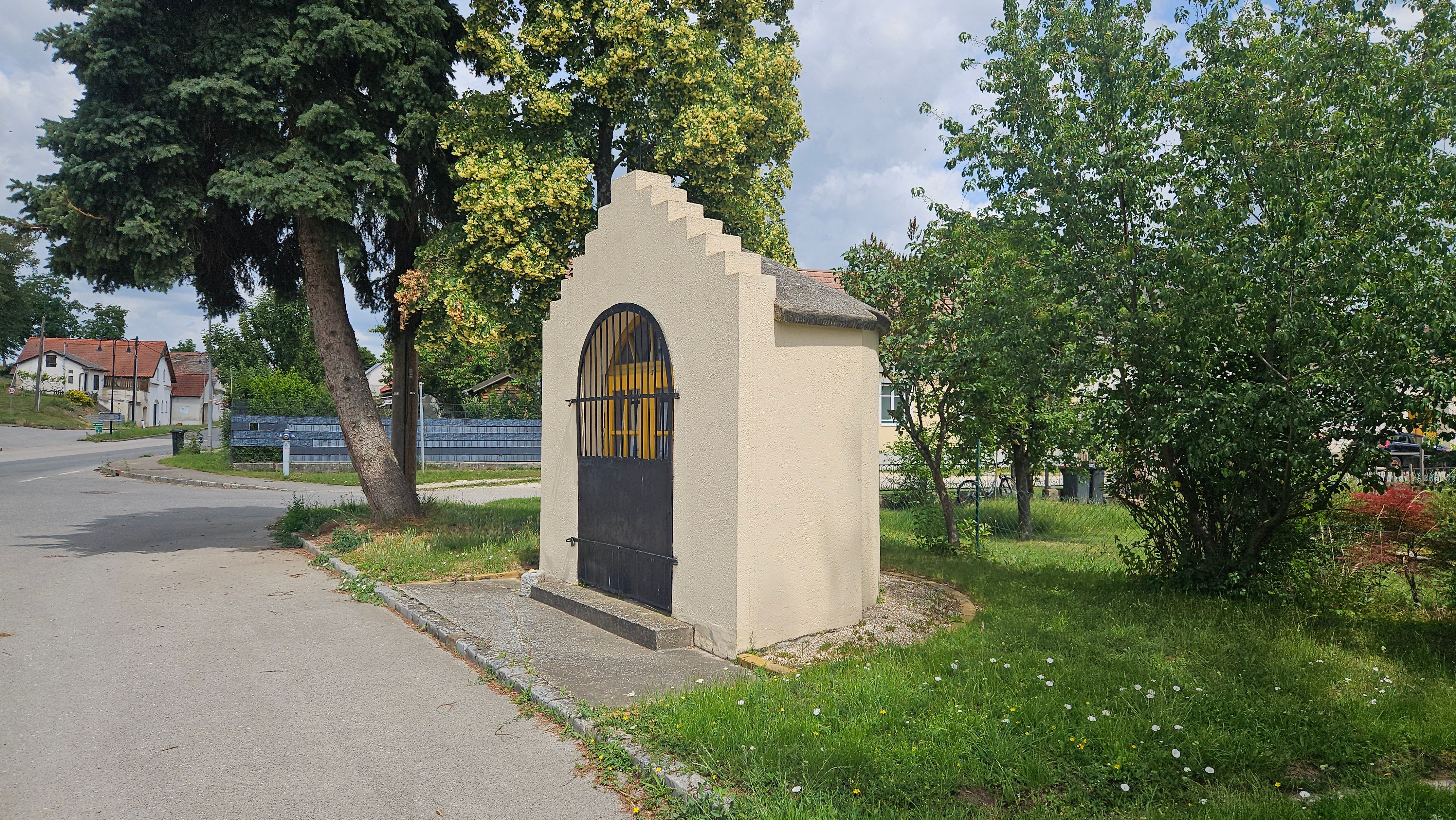
Plague chapels tell the story of a time when epidemics posed a grave threat to the lives of people in the Weinviertel region. They were built as places of prayer and thanksgiving—as a sign that a community had survived the plague, or as a vow that it might pass. Many of these small chapels still stand today, quiet and mostly unnoticed along the roadside, as a reminder of a vulnerability that is almost unimaginable today.
The history of the plague chapel in Kleinweikersdorf has been, in the truest sense of the word, eventful—especially in the recent past: Its original location was a few hundred meters further away; in the early 1970s, it was moved here—a location where it is also much better showcased online.
Alive to this day: Every year, the Plague Chapel is included in the prayer service and procession—a custom that keeps the old connection between the chapel and the village community alive. The chapel owes its excellent state of preservation to the care provided by the community: the exterior wooden parts were most recently sanded down and repainted by a public works employee—a small effort with a big impact for a historic monument that has stood the test of time for centuries.